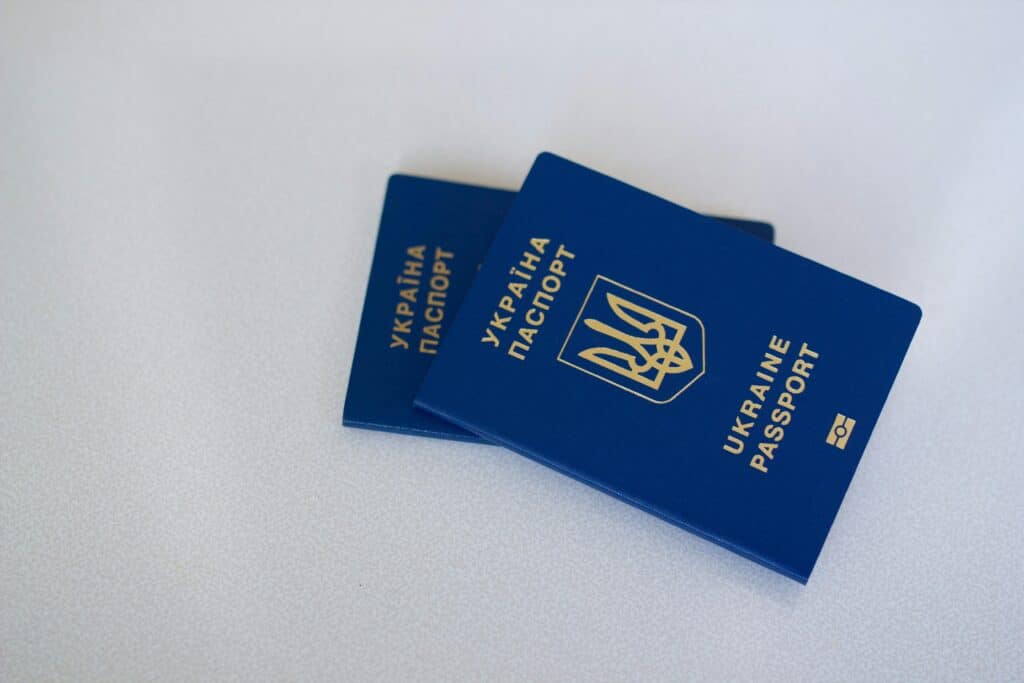
If you need a passport translated for an Australian visa or immigration application, this guide covers everything you need to know. It explains which pages require translation, who is qualified to translate a passport in Australia, how much it costs, and how to avoid the mistakes that most commonly cause delays.
Does Your Passport Need to Be Translated?
If your passport is written in a language other than English and forms part of an Australian visa or immigration application, the Department of Home Affairs requires a certified English translation of the relevant pages. The requirement applies to the document language — not the nationality of the passport holder.
Passports that commonly require translation for Australian immigration purposes include those issued by countries such as China, Japan, South Korea, Thailand, Indonesia, Vietnam, Brazil, Russia, Ukraine, and many others where the passport text is not in English.
If your passport already contains an English translation alongside the original language text — as some bilingual passports do — you should still confirm with your migration agent or the Department of Home Affairs whether a separate certified translation is required for your specific visa subclass. The presence of English text on the passport itself does not automatically satisfy the certified translation requirement.
Which Pages of a Passport Need to Be Translated?
For most Australian visa applications, you do not need to translate the entire passport. The pages that typically require certified translation include:
- The personal details page — This is the page that contains your full name, date of birth, place of birth, passport number, date of issue, date of expiry, and the issuing authority. It is the most commonly required page for translation.
- Any pages containing entry or exit stamps relevant to your application — For some visa subclasses, particularly partner visas and skilled migration visas, entry and exit stamps that demonstrate travel history may need to be translated if they are in a language other than English.
- Any pages containing visas issued by other countries — Where a foreign-language visa endorsement in your passport is relevant to your application, it may require translation.
- The biographic data page — In some passports, biographical information appears on a separate page from the photo page. If this page is in a foreign language, it requires translation.
When in doubt, translate all pages that contain text relevant to your application. A conservative approach costs little extra but protects against requests for further information during visa processing.
Who Can Translate a Passport in Australia?
The Department of Home Affairs requires that passport translations be completed by a translator who holds current NAATI certification or accreditation. NAATI — the National Accreditation Authority for Translators and Interpreters — is the recognised credentialling body for the translation profession in Australia.
This means that translations produced by the following are not accepted for immigration purposes, regardless of their accuracy:
- Friends, family members, or community contacts
- Bilingual staff at migration agencies or legal firms who are not NAATI certified
- Online machine translation tools including Google Translate, DeepL, or ChatGPT
- Translators who hold a NAATI Recognised Practising Translator (RPT) credential rather than full certification or accreditation
Only a NAATI certified or accredited translator in the relevant language pair can produce a passport translation that the Department of Home Affairs will accept.
What Does a Certified Passport Translation Include?
A compliant NAATI certified passport translation is not simply a typed version of the text in your passport. It must meet specific requirements to be accepted by the Department of Home Affairs.
A correctly completed certified passport translation will include:
- A full translation of all relevant text, including field labels, stamps, annotations, and any official notations
- A layout that mirrors the structure of the original document where practical, so that each translated element clearly corresponds to its position in the original
- The translator’s full name and contact details
- Their current NAATI credential number
- A signed statement of accuracy confirming the translation is a true and accurate rendering of the original
- The date the translation was completed
Without the NAATI credential number and signed statement of accuracy, the translation will not meet Department of Home Affairs requirements and is likely to be returned.
How Much Does Passport Translation Cost in Australia?
NAATI certified passport translation in Australia typically costs between $59 and $99 per page for the personal details page. This is one of the more affordable document types because the personal details page is short and follows a consistent format across most passports.
Additional pages — such as entry/exit stamp pages or pages containing foreign visas — are generally priced per page. Costs for these vary depending on the volume of text and the language pair involved.
Factors that affect the price include:
- Language pair — High-volume language pairs such as Mandarin, Japanese, Korean, Arabic, and Indonesian are typically priced at the lower end of the range. Less common language pairs attract higher rates due to limited translator availability.
- Number of pages — Most providers price the personal details page as a flat fee and charge additionally for each extra page required.
- Turnaround time — Standard delivery is typically 1 to 2 business days. Urgent or same-day processing attracts a surcharge.
- Delivery format — Digital PDF delivery is generally included in the standard price and is accepted by the Department of Home Affairs for online visa applications lodged through ImmiAccount.
How Long Does Passport Translation Take?
Standard turnaround for a NAATI certified passport translation is typically 1 to 2 business days from the time you submit a clear copy of the relevant pages. The personal details page is among the shortest and most straightforward document types to translate, so turnaround is generally fast.
If you need your translation urgently — for example, because of an imminent visa application deadline — most providers offer same-day or next-business-day processing for an additional fee. However, planning ahead and using standard turnaround is always the better-value option where your timeline allows.
How to Get Your Passport Translated: Step by Step
Getting a certified passport translation for an Australian visa application is a simple process when you follow the correct steps.
- Identify which pages need translation. Review your visa subclass requirements or confirm with your migration agent. At minimum, the personal details page will be required. Include any other pages containing text relevant to your application.
- Scan or photograph the relevant pages clearly. Each page should be fully visible, well-lit, and free of glare. Ensure no text is cut off at the edges. For the personal details page, capture both the photo and all text fields in a single image where possible.
- Choose a NAATI certified translation service. Confirm that the provider assigns your job to a NAATI certified or accredited translator in your specific language pair, and that their credential number will appear on the completed translation.
- Submit your pages and specify the language. When placing your order, confirm the passport’s language and the number of pages you need translated. If you are unsure which pages to include, err on the side of submitting more rather than fewer.
- Review the completed translation. Check that your full name, date of birth, passport number, and all other key details match the original exactly. Flag any discrepancies before submitting your visa application.
- Submit alongside the original passport copy. The Department of Home Affairs requires both the certified translation and a copy of the original foreign-language passport pages to be submitted together for most online visa applications.
Do You Need the Original Passport for Submission?
For visa applications lodged online through ImmiAccount, you submit scanned copies of documents rather than physical originals. You would upload a scan of the relevant passport pages alongside the certified English translation as a PDF.
However, in certain circumstances — such as in-person identity verification at an Australian visa application centre, or for some citizenship applications — you may be asked to present your original passport. Always keep your original passport in a safe, accessible location throughout the visa application process.
Passport Translation for Specific Visa Types
Partner and spouse visas (subclass 309, 820, 100, 801) — The personal details page is required for both the applicant and the sponsoring partner. Entry and exit stamps showing travel between Australia and the applicant’s home country may also require translation where they are in a foreign language.
Student visas (subclass 500) — The personal details page is typically required as a primary identity document. Additional pages are generally not required unless specifically requested.
Skilled migration visas (subclasses 189, 190, 491) — The personal details page is required. Travel history pages may be relevant for some applicants, particularly those who have held previous visas in third countries.
Citizenship by conferral — A current passport or travel document is required as a primary identity document. Foreign-language passports require a certified translation of the personal details page.
Parent visas (subclass 103, 143, 804, 884) — The personal details page is required for the applicant. Depending on the age of the applicant’s passport, older travel documents in foreign languages may also require translation.
Common Mistakes to Avoid with Passport Translation
Submitting only part of the personal details page. Some passports have a personal details page that extends across two pages or includes a machine-readable zone at the bottom. Make sure the entire page is captured and translated — including the machine-readable zone if it contains text in a foreign language.
Using an expired passport for translation. If your passport has expired, the Department of Home Affairs may still require a translation of it as a historical identity document. However, always check current requirements for your visa subclass, as rules differ.
Assuming a bilingual passport does not need translation. Some passports contain text in both the national language and English. However, the English text in the passport itself is not a certified translation. A separate NAATI certified translation is still required unless the Department of Home Affairs specifically advises otherwise.
Not checking name consistency. The name on your translated passport must match your name exactly as it appears across all other documents in your application. If your name is romanised differently in different documents, flag this with your migration agent before submitting.
Get Your Passport Translated Today
Immi Translating Service provides fast, NAATI certified passport translation for Australian visa and immigration applications. Digital delivery, transparent pricing, and compliant translations accepted by the Department of Home Affairs.
Order your passport translation online at Immi Translating Service — submit your document today and receive your certified translation within 1 to 2 business days.